
Supreme Court Judgment | Criminal Law
False Promise to Marry: Supreme Court Quashes Criminal Proceedings in Consensual Relationship Case
In Amol Bhagwan Nehul v. State of Maharashtra & Anr., the Supreme Court quashed criminal proceedings alleging repeated rape on a false assurance of marriage and criminal intimidation after finding that the allegations and surrounding circumstances did not disclose the required elements of inducement, misrepresentation, coercion or threat.
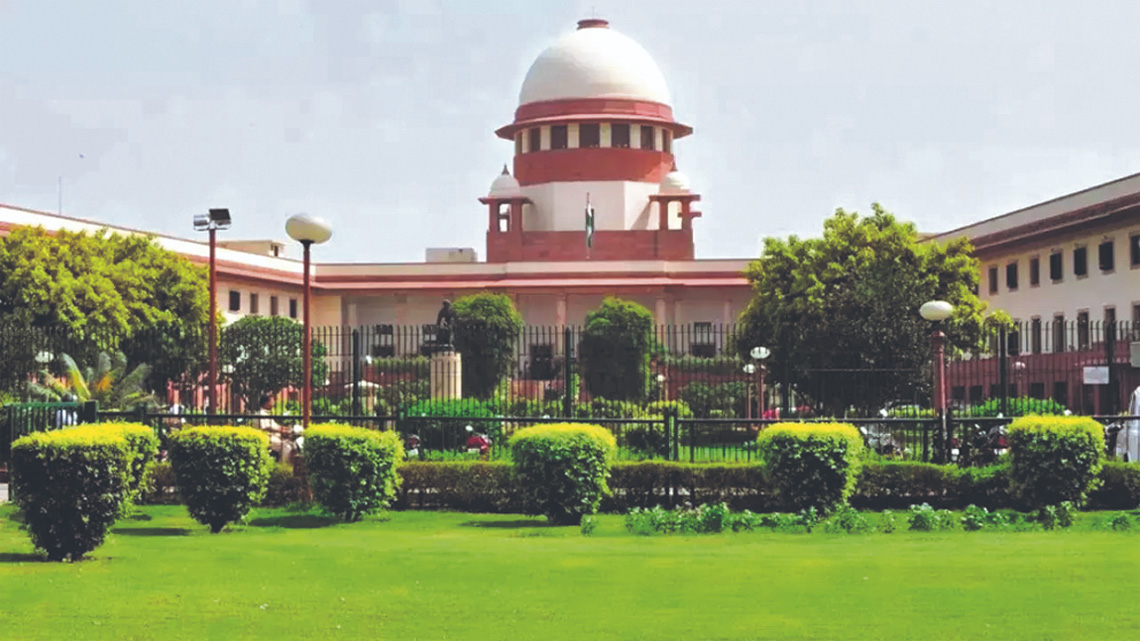
Supreme Court ruling in brief
The Supreme Court allowed the appeal and quashed C.R. No. 490/2023 and the proceedings arising from it in RCC No. 378/2023. The Court held that the material did not establish the ingredients of the offences alleged under Sections 376(2)(n) and 506 of the Indian Penal Code, 1860.
On the facts presented, the Court found no material showing that the complainant's consent had been obtained solely by inducement or misrepresentation based on a promise of marriage. It also found no material supporting coercion or a threat sufficient to sustain the criminal-intimidation allegation.
Current law after 1 July 2024
The alleged acts in this case occurred in 2022-2023, before the Bharatiya Nyaya Sanhita, 2023 came into force. The Supreme Court therefore examined the case under the Indian Penal Code, 1860 and the Code of Criminal Procedure, 1973.
For conduct occurring under the current criminal-law regime, Section 69 of the Bharatiya Nyaya Sanhita, 2023 specifically deals with sexual intercourse by deceitful means or by making a promise to marry a woman without any intention of fulfilling that promise, where the sexual intercourse does not amount to rape. It is therefore important not to treat every failed relationship or unfulfilled promise as automatically attracting criminal liability; the statutory elements, including the required dishonest intention or deceit, must still be established from the facts.
The High Court's inherent power to prevent abuse of process and secure the ends of justice, formerly contained in Section 482 CrPC, is now preserved in Section 528 of the Bharatiya Nagarik Suraksha Sanhita, 2023.
Facts of the case
The criminal case arose from a complaint by Respondent No. 2 alleging that the appellant, Amol Bhagwan Nehul, had sexual intercourse with her forcibly and on a false assurance of marriage between 8 June 2022 and 8 July 2023.
The complainant had previously been married and had a young son. The appellant, who was a student and her neighbour, was considerably younger. According to the complaint, the appellant entered her house in July 2022 and had sexual intercourse with her on the assurance that he would marry her. Further instances were alleged in September 2022 and January 2023. She also alleged an act of unnatural sex in January 2023.
On 8 July 2023, the complainant visited the appellant's native village. His family allegedly opposed the proposed marriage on account of religious differences and allegedly assaulted her. The FIR was registered on 31 July 2023.
Defence of the appellant
The appellant denied the allegations and asserted that the complainant had harassed him, visited his college, and threatened to implicate him in a false rape case if he refused to marry her. His father had also made a written complaint alleging harassment by the complainant.
The appellant was granted anticipatory bail by the Additional Sessions Judge. The bail court noted, among other circumstances, that the complainant was an adult and that the material indicated a consensual physical relationship.
Why the Supreme Court quashed the case
Central finding: even if the allegations in the FIR were taken at face value, the surrounding facts did not show that the complainant's consent was obtained merely because of a false promise to marry or through coercion, inducement or misrepresentation attributable to the appellant.
The Supreme Court took note of the length and nature of the relationship. The complainant had remained in the relationship for more than a year and had met the appellant at lodges on separate occasions. The Court found no material showing that the appellant had induced the relationship by making a promise of marriage that was false from its inception.
The Court also considered the fact that the complainant obtained divorce from her earlier husband on 29 December 2022, after some of the alleged incidents had already occurred. This circumstance was relevant to the Court's assessment of the allegation that the physical relationship from the outset was based solely on an assurance of marriage.
The Court further found no material showing coercion or threat of injury sufficient to sustain the offence of criminal intimidation under Section 506 IPC.
False promise to marry and consent
The judgment reiterates an important distinction in criminal law: a promise that later remains unfulfilled is not, by itself, the same as a promise that was false from the beginning. In cases alleging sexual intercourse on a false promise of marriage, courts examine whether the promise was made without any genuine intention of being fulfilled and whether it had a direct bearing on the complainant's decision to consent.
The Supreme Court concluded that the allegations in this case did not disclose such inducement or misrepresentation. The material instead indicated a consensual relationship which subsequently deteriorated.
The Court concluded, on the facts before it, that this was not a case of a false promise to marry and that a consensual relationship turning sour could not by itself justify invocation of the criminal machinery.
Bhajan Lal principles and quashing of proceedings
The Supreme Court applied the principles governing quashing of criminal proceedings identified in State of Haryana v. Bhajan Lal. Those principles permit constitutional courts to intervene where continuation of criminal proceedings would amount to abuse of the process of law or where the allegations, even if accepted at face value, do not disclose the essential ingredients of the alleged offences.
Final order
The Supreme Court allowed the appeal, set aside the Bombay High Court's order dated 28 June 2024, quashed C.R. No. 490/2023 and the proceedings arising from it in RCC No. 378/2023, and discharged the appellant.
Download the judgment
Amol Bhagwan Nehul v. State of Maharashtra & Anr., 2025 INSC 782, decided on 26 May 2025.
Last reviewed and legally updated: 5 September 2026.