
Supreme Court Judgment | Disability Rights & Service Law
Supreme Court Restores Seniority, Probation and Promotion Benefits to Regularised Employees with Benchmark Disabilities in Kerala
In Maya P.C. & Ors. v. State of Kerala & Anr., the Supreme Court held that Kerala could not use a later Government Order to withdraw service benefits flowing from regular appointments already granted to persons with benchmark disabilities. The Court restored the relief granted by the Kerala High Court Single Judge and the Kerala Administrative Tribunal.
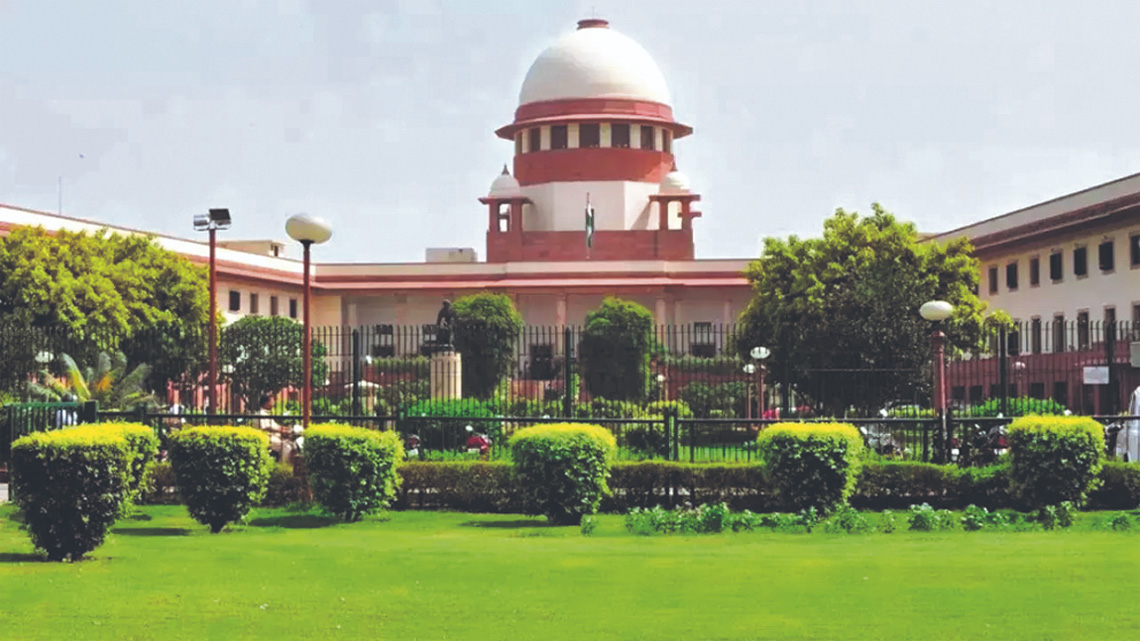
Supreme Court ruling in brief
The Supreme Court held that the Government Order dated 18 May 2013 contemplated regular appointment of eligible persons with disabilities who had earlier served temporarily through the employment exchange. Once regular appointment and probation-related consequences had been conferred, the State could not subsequently withdraw those benefits by the Government Order dated 3 February 2016.
The Court held the later restriction discriminatory and irrational and therefore violative of Article 14 of the Constitution. It set aside the judgments of the Division Bench of the Kerala High Court and restored the decisions granting seniority, declaration of probation and promotion-related service benefits.
Current disability-rights framework
The judgment arose from appointments traceable to Kerala Government policy and the earlier disability-rights regime. Today, public employment protections for persons with disabilities are principally governed by the Rights of Persons with Disabilities Act, 2016.
Section 20 of the 2016 Act addresses non-discrimination in employment. Sections 33 and 34 deal with identification of posts and reservation for persons with benchmark disabilities in Government establishments. Section 34 presently provides reservation of not less than four per cent of vacancies in cadre strength in each group of posts, subject to the statutory scheme and applicable Government instructions.
This Supreme Court decision is especially relevant where the State has itself granted a regular appointment and later attempts to deny normal incidents of service without a rational and legally sustainable basis.
Background: Kerala Government Order of 18 May 2013
In 2013, the State Government issued an order providing for the creation of supernumerary posts for approximately 2,677 persons with disabilities who had earlier completed 179 days of temporary service after being appointed through employment exchanges under Rule 9(a)(i) of the Kerala State and Subordinate Service Rules.
The scheme contemplated reappointment or regular appointment of these employees. The supernumerary posts were to cease to exist when the incumbents retired. Pursuant to the Government Order, the appellants were reappointed in their respective departments on a regular basis.
2016 order restricting service benefits
On 3 February 2016, Kerala issued another Government Order declaring that persons reappointed under the 2013 scheme would not be eligible for declaration of probation, inclusion in the combined seniority list, or consideration for promotion.
This restriction directly affected employees who had already been appointed, had served for substantial periods, and in several cases had completed probation, passed departmental tests or been included in seniority lists.
Individual service consequences
In Civil Appeal No. 14915 of 2024, the appellants had been appointed as Assistants in Mahatma Gandhi University. After their reappointment under the 2013 Government Orders, several completed probation, passed departmental examinations and were included in the final seniority list. Following the 2016 Government Order, they were excluded from the combined seniority list and denied promotion benefits.
In the connected appeals, similar consequences followed. Employees who had accepted reappointment against supernumerary posts were denied probation or seniority benefits, and in one case an employee's promotion and regularisation were subsequently cancelled by relying on the 2016 order.
Earlier proceedings before Kerala High Court and Tribunal
A learned Single Judge of the Kerala High Court allowed the employees' challenge and directed grant of seniority, declaration of probation and promotion benefits. The Kerala Administrative Tribunal granted similar relief in connected matters.
However, Division Benches of the Kerala High Court later reversed those decisions, taking the view that appointments against supernumerary posts under the special scheme were policy concessions and did not create enforceable rights to promotion or seniority.
Arguments before the Supreme Court
The employees argued that neither the 2013 Government Order nor their appointment orders stated that they would be permanently denied promotion or other normal service benefits. Many had already been included in seniority lists or had their probation declared before the 2016 restrictions were imposed.
It was also pointed out that some employees had changed their position substantially in reliance on the promise of regular appointment, including by resigning from other regular employment.
Kerala argued that the 2013 scheme was intended as a measure of reasonable accommodation and that further benefits such as seniority and promotion could adversely affect employees recruited through regular competitive processes. Reliance was also placed on Secretary, State of Karnataka v. Uma Devi (3).
Why the Supreme Court ruled for the employees
Central holding: the 2013 Government Order expressly contemplated regular appointment. Once that benefit had been conferred and appointments were made on probation, the State could not later withdraw the resulting service benefits through the 2016 Government Order.
The Supreme Court examined the 2013 Government Order and noted that it authorised creation of supernumerary posts for reappointment of eligible persons with disabilities and specifically referred to detailed guidelines for their "regular appointment".
The Court further observed that the appointment orders in the connected cases did not state that the employees would be denied completion of probation or promotion. The 2016 Government Order therefore attempted to take away a benefit that had already been specifically conferred under the earlier policy.
The Court also took into account the fact that many appellants had altered their position in reliance on the 2013 policy, including by opting for the new employment and foregoing other opportunities.
The Supreme Court held that the 2016 Government Order, insofar as it withdrew the incidents of regular appointment conferred by the 2013 order, was discriminatory and irrational and therefore violated Article 14 of the Constitution.
Article 14 and equal treatment in service
The judgment is significant because it treats the State's own representation of "regular appointment" as carrying legal consequences. Once employees were regularly appointed and placed on probation, the State could not create an arbitrary subclass of regular employees who would permanently remain outside ordinary seniority and promotional structures without a rational basis.
The Court's reasoning therefore rests not merely on disability welfare but also on the constitutional requirement of non-arbitrariness in State action under Article 14.
Impact on seniority, probation and promotion
By restoring the judgments of the Single Judge and the Kerala Administrative Tribunal, the Supreme Court revived the relief granted to the affected employees concerning seniority, declaration of probation and promotion-related benefits in accordance with the applicable service rules and the terms of their regular appointments.
The decision does not mean that every appointment to a supernumerary post automatically creates an unrestricted right to promotion. Its importance lies in the specific factual and legal setting: Kerala had expressly granted regular appointments and later attempted to withdraw normal service incidents from the very same beneficiaries.
Final order
The Supreme Court allowed the appeals, set aside the judgments of the Division Bench of the Kerala High Court, and restored the judgments of the learned Single Judge of the Kerala High Court and the Kerala Administrative Tribunal.
Download the judgment
Maya P.C. & Ors. v. State of Kerala & Anr., 2025 INSC 773, Civil Appeal No. 14915 of 2024 and connected appeals, decided on 23 May 2025.
Last reviewed and legally updated: 5 September 2026.