
Supreme Court Judgment | PCPNDT Act
Supreme Court Quashes PCPNDT FIR Where Clinic Search Was Not Lawfully Authorised
In Ravinder Kumar v. State of Haryana, the Supreme Court quashed an FIR and criminal complaint under the Pre-Conception and Pre-Natal Diagnostic Techniques (Prohibition of Sex Selection) Act, 1994 because the search of the doctor's clinic was not authorised in the manner required by Section 30(1). The prosecution case against him was founded on material obtained during that unlawful search.
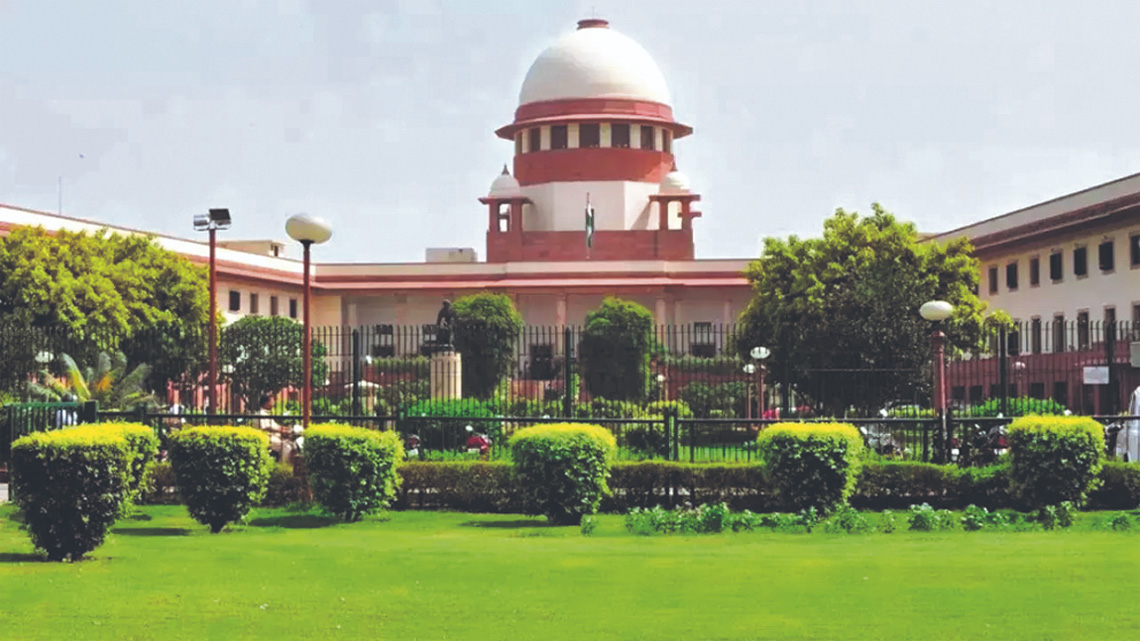
Supreme Court ruling in brief
The Supreme Court held that a search under Section 30(1) of the PCPNDT Act must be authorised by the Appropriate Authority as a body. A single member, including its Chairperson, cannot independently take the statutory decision to conduct the search where the law entrusts that decision to the Appropriate Authority.
Since there had been no lawful decision of the Appropriate Authority to search the appellant's clinic, the search was illegal. The FIR and complaint were founded on the material seized in that search and there was otherwise nothing connecting the appellant with the alleged offence under Section 23. Continuing the prosecution would therefore amount to abuse of process.
Current legal framework
The Pre-Conception and Pre-Natal Diagnostic Techniques (Prohibition of Sex Selection) Act, 1994 remains in force. Section 17 deals with constitution of Appropriate Authorities, Section 17A specifies their powers, Section 23 provides offences and penalties, Section 28 regulates cognizance, and Section 30 governs search and seizure of records, material objects and other relevant items.
The Court's ruling does not dilute the prohibition on sex selection or unlawful sex determination. It requires enforcement authorities to comply with the statutory safeguards built into the Act when exercising search powers.
For present-day criminal proceedings, the High Court's inherent jurisdiction to prevent abuse of process and secure the ends of justice is preserved by Section 528 of the Bharatiya Nagarik Suraksha Sanhita, 2023, corresponding to the former Section 482 CrPC.
Facts of the case
The appellant stated that he had practised as a general physician since 2001 and as a radiologist since 2007. On 27 April 2017, a team of four officers conducted a raid at his diagnostic clinic in Gurugram.
The raid followed allegations against another accused, Dhanpati, that she was involved in a racket concerning sex determination and medical termination of pregnancy. A decoy patient was used in the operation, accompanied by a shadow witness.
According to the prosecution, Dhanpati initially discussed performing a medical termination of pregnancy and later arranged for an ultrasound examination for reconfirmation of the foetus's sex. A payment of ₹15,000 was allegedly negotiated.
Raid at the diagnostic centre
The decoy patient, the shadow witness and others ultimately reached the appellant's diagnostic centre. After the patient and another accused came out, the police and search team entered the premises.
Cash was seized and an ultrasound report relating to the decoy patient was recovered. The prosecution alleged that the appellant had signed the report.
FIR No. 408 dated 27 April 2017 was then registered at Gurugram for an offence punishable under Section 23 of the PCPNDT Act. The District Appropriate Authority also filed a complaint under Section 28(1) before the Chief Judicial Magistrate, Gurugram.
Challenge before the High Court
The appellant sought quashing of both the FIR and the complaint. The High Court declined to interfere. The matter therefore reached the Supreme Court.
Section 30 PCPNDT Act: who can authorise a search?
Key holding: the statutory satisfaction that there is "reason to believe" an offence has been or is being committed must be that of the Appropriate Authority. An individual member acting alone cannot substitute his or her personal decision for the decision entrusted by Section 30(1) to the Authority.
The Supreme Court explained that the expression "reason to believe" should not be interpreted in a manner that makes prompt enforcement impracticable. Material received by any member should be made available to the members of the Appropriate Authority without delay so that the Authority can promptly decide whether action under Section 30 is warranted.
The Court also clarified that the Appropriate Authority is not required to write a detailed reasoned order before every search. However, there must be a rational basis for the statutory belief and the decision to exercise the power must legally be that of the Appropriate Authority.
Why the search was held illegal
In this case, the Court found that there had been no lawful decision by the Appropriate Authority under Section 30(1) authorising the search of the appellant's clinic. The decision had effectively been taken by an individual member.
Because the search itself lacked valid statutory authorisation, the Court treated it as illegal.
Effect on the FIR and complaint
The Supreme Court examined the foundation of the FIR and the statutory complaint and found that the case against the appellant rested on material recovered during the raid, including the seized documents.
Apart from what had emerged from the illegal search and seizure, the Court found no material connecting the appellant with the alleged offence punishable under Section 23 of the PCPNDT Act.
Where the prosecution against the appellant depended on the fruits of an illegally authorised search and no independent material connected him with the offence, continuation of the criminal case would amount to abuse of the process of law.
Important legal distinction
The judgment should not be read as holding that every procedural irregularity in a PCPNDT investigation automatically requires quashing. The decisive features here were the absence of a legally valid decision under Section 30(1) and the lack of independent material connecting the appellant with the offence.
The ruling therefore emphasises both effective enforcement of the PCPNDT Act and adherence to the statutory structure governing intrusive search and seizure powers.
Final order
The Supreme Court allowed the appeal and set aside the High Court judgment dated 13 January 2023. FIR No. 408 dated 27 April 2017 registered at Gurugram and Complaint No. COMA 40 of 2018 pending before the Chief Judicial Magistrate, Gurugram were quashed.
Download the judgment
Ravinder Kumar v. State of Haryana, 2024 INSC 684, Criminal Appeal No. 3747 of 2024, decided on 12 September 2024.
Last reviewed and legally updated: 5 September 2026.