
Supreme Court Judgment | UAPA Sanction
Independent Review and Mandatory Timelines Are Essential for Valid UAPA Sanction
In Fuleshwar Gope v. Union of India & Ors., the Supreme Court clarified that Section 45 of the Unlawful Activities (Prevention) Act, 1967 requires an independent review by the recommending authority and an independent decision by the sanctioning Government. The statutory timelines in Rules 3 and 4 of the 2008 Rules are mandatory.
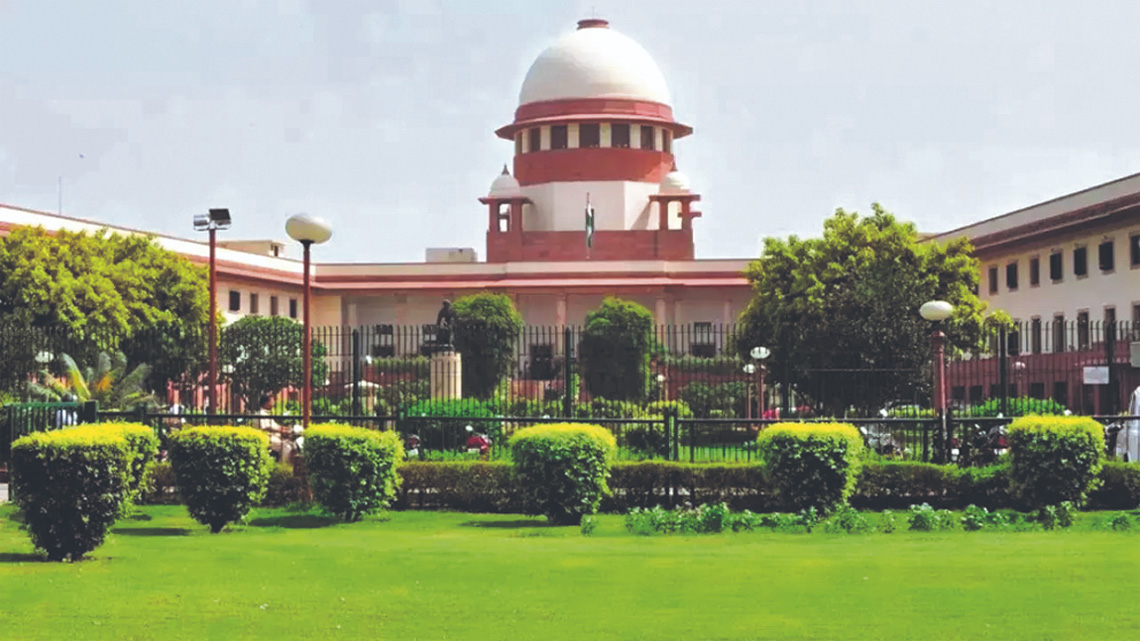
Supreme Court ruling in brief
The Court held that a challenge to the validity of sanction should ordinarily be raised at the earliest available opportunity before the trial court. A delayed challenge may still be considered, but the person raising it must explain the delay.
More importantly, the Court held that the timelines in Rules 3 and 4 of the Unlawful Activities (Prevention) (Recommendation and Sanction of Prosecution) Rules, 2008 are mandatory. Independent review by both the recommending authority and the sanctioning authority is an essential safeguard under Section 45 UAPA.
Current law under Section 45 UAPA
Section 45(2) of the UAPA requires sanction to be granted only after considering the report of an authority appointed by the Central or State Government. That authority must independently review the evidence collected during investigation and make a recommendation within the prescribed period.
Under Rule 3 of the 2008 Rules, the Authority must submit its recommendation within seven working days of receiving the evidence gathered by the investigating officer. Under Rule 4, the Central or State Government must decide the sanction request within seven working days of receiving the Authority's recommendation.
Background of the case
The prosecution case alleged that Fuleshwar Gope was associated with the People's Liberation Front of India (PLFI) and was involved in activities connected with funds allegedly collected for the organisation.
FIR No. 67 of 2016 was originally registered at Bero, Jharkhand under provisions of the Indian Penal Code, the UAPA and the Criminal Law Amendment Act, 1908. The investigation was later transferred to the National Investigation Agency.
In a supplementary charge sheet filed on 21 October 2019, the appellant had initially been cited as a prosecution witness. He was subsequently arrested on 13 July 2020, and a sanction order dated 22 July 2020 was issued against additional accused persons including the appellant. A second supplementary charge sheet followed under Sections 17, 18, 21 and 22C UAPA.
Challenge before the Jharkhand High Court
The appellant filed a writ petition seeking quashing of the sanction order dated 22 July 2020, the order taking cognizance of the second supplementary charge sheet and the subsequent order framing charges. The Jharkhand High Court declined to quash the proceedings, leading to the appeal before the Supreme Court.
Why independent review matters under Section 45
Key principle: sanction under the UAPA is not intended to be a mechanical formality. The recommending authority must independently review the investigation material, and the Government granting sanction must independently apply its mind to the recommendation and material before it.
The Supreme Court emphasised that UAPA is a penal statute carrying serious consequences. Its procedural safeguards must therefore be strictly observed. The statutory review mechanism acts as a check on executive power before prosecution for specified UAPA offences can proceed.
Mandatory seven-working-day timelines
The Court held that the language of Rules 3 and 4 is mandatory. The Authority's review and recommendation must be completed within seven working days of receipt of the evidence, and the Government's sanction decision must follow within seven working days of receipt of that recommendation.
The statutory timelines and two-stage independent review process are safeguards against mechanical or unchecked exercise of prosecutorial sanction under the UAPA.
When should validity of sanction be challenged?
The Supreme Court stated that the validity of sanction should ordinarily be challenged at the earliest opportunity before the trial court. If the issue is raised only at a later appellate stage, the person challenging the sanction must explain why it was not raised earlier.
This rule is intended to prevent misuse of sanction objections merely to stall or delay an ongoing trial while preserving the right to challenge a genuinely defective sanction.
Other issues left for the trial court
The Court also considered arguments concerning joinder of charges and accused under Sections 218 to 223 CrPC. It left certain factual questions for determination by the trial court.
Similarly, whether the statutory exemption relating to company officers under Section 22A applied to the appellant depended on evidence concerning his role and efforts, if any, to prevent the alleged offence. That issue was also left to the trial court.
Final order
Although the Supreme Court laid down important principles regarding Section 45 and the 2008 Rules, it found no ground to grant relief to the appellant on the facts of the case. The appeal was therefore dismissed and pending applications were disposed of.
Download the judgment
Fuleshwar Gope v. Union of India & Ors., 2024 INSC 718, decided on 23 September 2024.
Last reviewed and legally updated: 5 September 2026.