
Supreme Court Sets Aside Findings Based on Alleged Cash Sale Consideration: Lakha Singh v Balwinder Singh
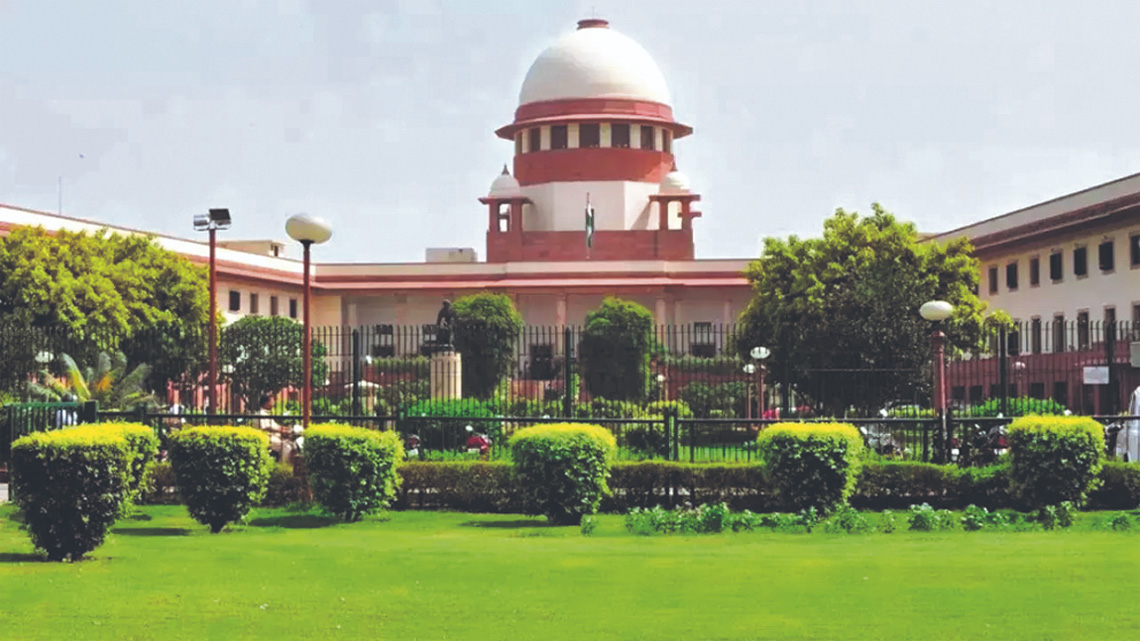
The Supreme Court allowed the appeal filed by the seller and set aside the judgments of the Trial Court, First Appellate Court and the Punjab and Haryana High Court. The dispute arose from an alleged agreement to sell agricultural land and an alleged cash payment of ₹16,00,000 as earnest money.
Facts of the case
The respondent-plaintiff claimed that the appellant-defendant, owner of agricultural land measuring about 30 Kanals and 8 Marlas at Village Amrike, Tehsil Patti, District Tarn Taran, Punjab, had agreed to sell the land under an agreement dated 7 May 2007 at the rate of ₹5,00,000 per Killa.
According to the plaintiff, ₹16,00,000 was paid in cash as earnest money on the date of the agreement and the sale deed was to be executed and registered on 19 September 2008. The plaintiff later instituted a suit seeking specific performance, permanent injunction and, in the alternative, recovery of ₹19,00,000 including the alleged earnest money and damages.
The Trial Court refused specific performance but granted alternative recovery of ₹16,00,000 with interest. The First Appellate Court affirmed the decision, and the Punjab and Haryana High Court dismissed the seller's second appeal. The seller then approached the Supreme Court.
What the Supreme Court examined
The Supreme Court closely examined the disputed agreement, the plaintiff's evidence and the surrounding circumstances. Among other things, the Court noted that the plaintiff did not state in his examination-in-chief that he carried the balance sale consideration when he allegedly went to the office of the Sub-Registrar on 19 September 2008.
The Court also recorded that there was no case that the plaintiff had offered the balance consideration to the seller either before or on the scheduled date. The plaintiff further admitted that he had not obtained departmental permission before entering into a high-value property transaction.
Supreme Court's findings
The Court concluded that the cumulative circumstances were sufficient to treat the plaintiff's version regarding the disputed agreement, the alleged cash payment of ₹16,00,000 and the claimed attempt to have the sale deed executed as fraudulent and concocted.
The Supreme Court held that these vital factual aspects had been overlooked by the courts below. It therefore exercised jurisdiction under Article 136 of the Constitution of India and held that the Trial Court judgment dated 18 February 2013, the First Appellate Court judgment dated 20 March 2017 and the High Court judgment dated 25 April 2018 suffered from perversity and could not be sustained.
Accordingly, the appeal was allowed and the impugned judgments were quashed and set aside, with no order as to costs.
Legal significance
The decision is important for disputes involving agreements to sell, alleged cash consideration and claims for specific performance or recovery. It demonstrates that concurrent findings do not prevent Supreme Court interference where material evidence is misread or ignored and the resulting conclusions are perverse.
The governing central legislation for specific relief continues to be the Specific Relief Act, 1963. Claims for specific performance must be assessed in accordance with the applicable statutory provisions and the evidence proved in the individual case.